Ganesha Chaturthi 2022- Overview
Ganesha Chaturthi 2022 is on Wednesday, August 31, 2022. It is one of the well-known Hindu celebrations observed in India and is also known as Ganesha Chauth or Vinayaka Chaturthi. It is the day when Lord Ganesha was born. Lord Ganesh was born in the Shukla Paksha of the Bhadrapada month, in the Swati nakshatra according to Hindu mythology.

Ganesha Chaturthi Date, Time and Muhurat
Ganesha Chaturthi- August 31, 2022, Wednesday
Ganesha Chaturthi Tithi Starts – at 03:33 PM on Aug 30, 2022
Ganesha Chaturthi Tithi Ends – 03:22 PM on Aug 31, 2022
Madhyahna Ganesha Chaturthi Puja Muhurat – 11:04 AM – 01:37 PM
Ganesha Visarjan- September 9, 2022, Friday
Want to know more about the Muhurta and Pooja Rituals on Ganesha Chaturthi? Connect with the best Vedic astrologers and get answers to all your questions.
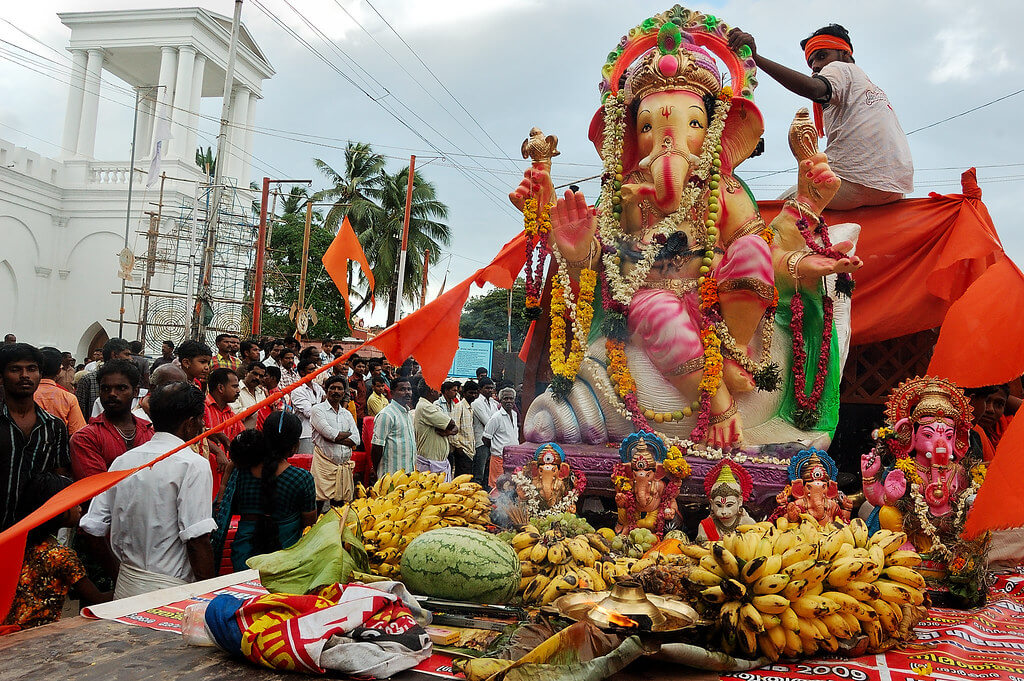
Ganesh Chaturthi 2022- Ganeshotsav Celebration
The festival of Ganesha Chaturthi commemorates the birth of the Hindu deity Ganesha. Lord Ganesha is revered as the god of knowledge, wealth, and fortune. According to popular belief, Lord Ganesh was born on the Shukla Paksha of the Bhadrapada month. According to the Gregorian calendar (English calendar), Ganesh Chaturthi falls in August or September.
After ten days, on Anant Chaturdashi, the ritual of Ganesh Visarjan takes place, i.e., the idol of Lord Ganesha is immersed in a water body, after a spectacular street parade, which marks the end of the 10-day festival known as Ganeshotsav.
Ganapati Puja Muhurat and Ganapati Sthapana on Ganesha Chaturthi
On Ganesha Chaturthi, Ganapati Sthapana and Ganapati Puja are performed during the Madhyahna part of the day, which is the most suitable time for Ganesha Puja according to Vedic astrology as lord Ganesha was born during the Madhyahna Kaal. According to the Hindu day division, Madhyahna Kala corresponds to midday.
The Shodashopachara Ganapati Puja, which is a meticulous ceremonial Ganesha Puja, is performed by Ganesha devotees in the middle of the day.
Avoid Moon Sighting on Ganesha Chaturthi
On Ganesh Chaturthi, it is thought that one should not see the moon. A false accusation called Mithya Dosham or Mithya Kalank is caused by seeing the moon on Ganesh Chaturthi.
It is said that the moon once laughed at Ganesha upon seeing him riding a mouse. Ganesha was outraged by this, so he cursed the moon in his rage. Ganesha insisted that no one on earth was to look at the moon on Chaturthi day of Bhadrapada i.e., Ganesha Chaturthi, despite the fact that he later reversed his curse after being convinced by other gods.
According to Puranic mythology, Lord Krishna was wrongly accused of taking the priceless jewel known as Syamantaka. Sage Narada, who had witnessed Lord Krishna’s suffering, had revealed that the reason for Lord Krishna’s Mithya Dosha was that he had seen the moon on the day of Bhadrapada Shukla Chaturthi (Ganesha Chaturthi).
Lord Krishna was further informed by Sage Narada that Chandra Dev or (moon) had been cursed by Lord Ganesha, who said that anyone who saw the moon on Bhadrapada Shukla Ganesha Chaturthi, would be afflicted with Mithya Dosha, their image would be tarnished, and they would lose their honor in society. Lord Krishna performed Ganesha Chaturthi fasting to remove Mithya Dosha on the advice of the sage Narada.
Mantra for Preventing Mithya Dosha
Depending on when Ganesha Chaturthi Tithi begins and ends, it is forbidden to see the moon for two days in a row.
If someone accidentally has seen the moon on Ganesha Chaturthi, they should recite the following mantra 24, 58 or 108 times to break the curse:
सिंहः प्रसेनमवधीत्सिंहो जाम्बवता हतः।
सुकुमारक मारोदीस्तव ह्येष स्यमन्तकः॥
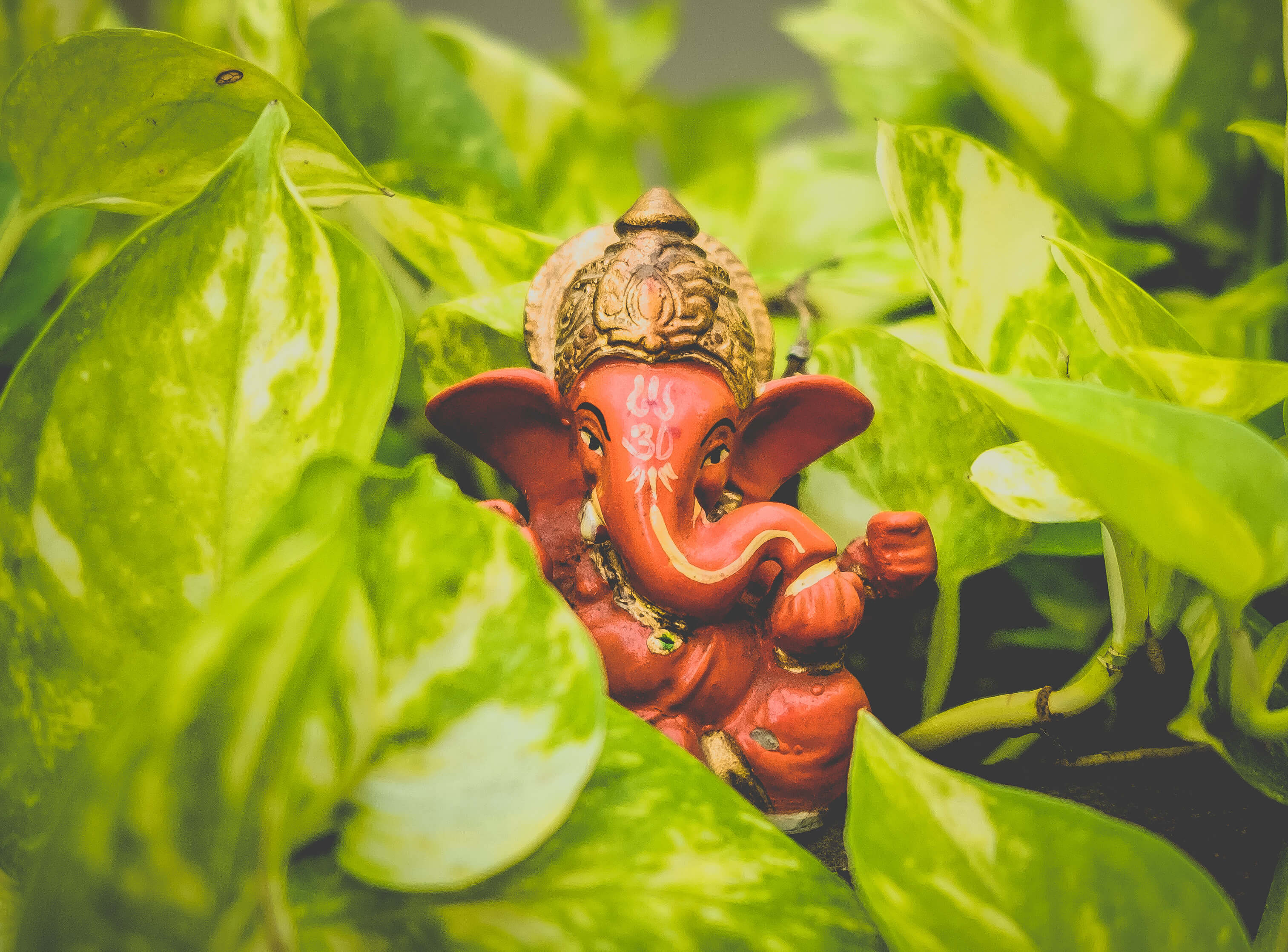
Ganesh Chaturthi and Significance of Lord Ganesha
Ganesha is a composite name made up of the Sanskrit words Gana, which means “group or classification system,” and Isha, which means “lord or master.” The term “Gana” is frequently used to refer to the Ganas, a group of semi-divine entities who are a part of Shiva’s entourage.
Although Ganesha has various characteristics, his elephant head sets him apart. More specifically, he is highly regarded as the Lord of knowledge and wisdom, the remover of impediments, the benefactor of the arts and sciences, and the bearer of good fortune. He is revered at the commencement of rituals and ceremonies since he is the deity of new beginnings.
The Puranas and Buddhist Tantras both use the common names Vinayaka and Binayaka for Ganesha. His principal role in Hinduism is the master and remover of barriers, which is indicated by the names Vighnesha and Vighneshvara (Lord of Obstacles) (vighna).
Ganesha is revered as the God of wisdom and the written text.
On Ganesha Chaturthi, he is commonly worshipped with red sandalwood paste (Rakta Chandana) or red flowers because of his connection with the colour red. Other items, such as Durva grass, are also included in his worship.
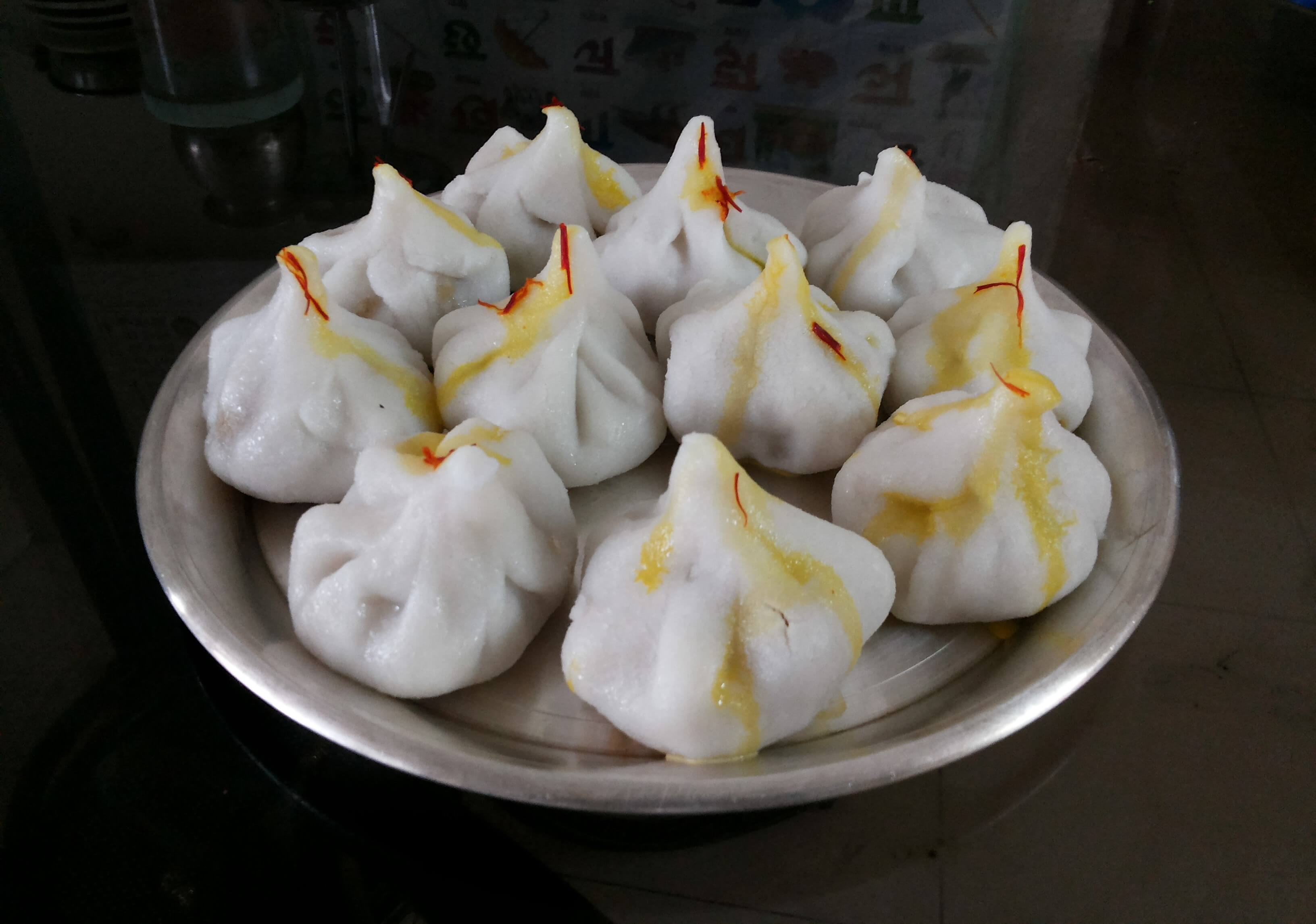
Tulsi should not be offered to Lord Ganesha. Ganesha devotees offer to him delicacies like modaka and little sweet balls known as laddus. He frequently appears with a modakpatra, a bowl filled with sweets.
Ganesh Chaturthi- Story of Ganesha’s birth
Ganesha, according to the Shiva Purana, was made by Lord Shiva’s wife, Goddess Parvati. To marry Shiva, she underwent arduous tapas or penance, and she gave up all creature comforts to reside with him at Mount Kailash.
She once requested that Nandi, shiva’s Gana, keep watch as she took a bath. But much to Parvati’s dismay, when Lord Shiva arrived, he opened the door for his lord. She made the decision that no one would disobey Shiva and serve as her loyal guard.
One day when Goddess Parvati was taking a bath. She applied turmeric, sandalwood and saffron ubtan (paste) to herself, gathered it on her body, and then used her supernatural powers to give it life. Ganesha was this supernatural creature she created from her own body. She gave the child a stick and instructed him to keep watch until she had finished her morning bath.
Lord Shiva ordered his emissaries to battle this kid under the direction of Nandi because he was offended by the boy’s bravado. However, the young kid fought back and vanquished them by utilizing the stick his mother had given him. Shiva had to arrive at that point, and as they battled, Shiva used his trident to cut off the boy’s head.
When Parvati emerged, she discovered her devoted son’s body had been cut, and she sobbed vehemently. She asked the Lord to revive her son, who was a creation of her own body. Lord Shiva told Goddess Parvati that he could not join the boy’s head back because his head had been cut by the holy Trishul/ trident.
Lord Vishnu then came to their rescue and told them to bring the head of the first creature they had discovered lying northward. They brought back an elephant’s head.
The boy was brought back to life by Lord Shiva, who connected the elephant’s head to the boy’s body using his mystical abilities. Shiva said that Ganesha would now be known as Ganesha i.e., the Lord of the Ganas, who should be worshipped before other gods and prior to beginning any Endeavor and for the elimination of barriers and hardships in one’s life.
Parvati was thrilled to see her son return back to life. Since he vanquished his Ganas or Shiva’s army, he has been referred to as Ganapati.
Some believe that the Head Shiva conjoined to the body of the boy was not of an Elephant calf but of one of his own Ganas, that is why the name Ganapati.
According to some, the day when Shiva conjoined Ganesha’s head is when Ganesha Chaturthi is celebrated and there are others who believe that Ganesha Chaturthi is the day when Parvati breathed life into the clay statue.
Are you facing problems in your career, finances or Love life??? Connect now with the best astrologers and get solutions to all your problems❤️?.