Navratri 2022 – Overview
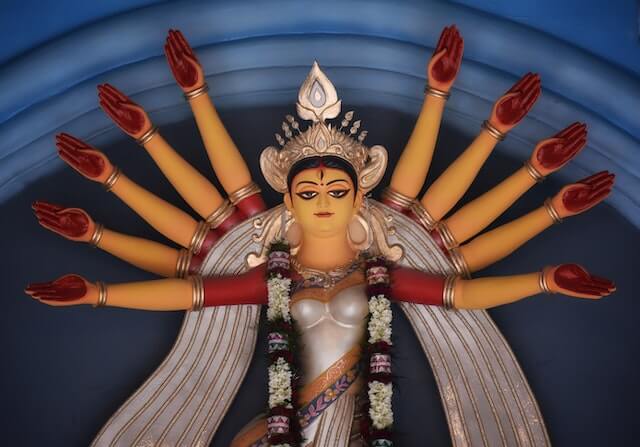
In Northern and Eastern India, Navratri is observed with tremendous enthusiasm. The festival of Navratri commemorates the nine nights of the struggle between good and evil, which ends with the triumph of good on the tenth day. Devi Durga is celebrated as the goddess of strength, vigor, and intelligence during this time.
During Navratri, people assemble to worship Devi Durga, the mother goddess who bears numerous weapons in her arms. The event lasts for nine days and nights because Devi Durga defeated an evil demon in a war that lasted nine days and nights.
Each day is symbolized by a different color that represents one of her distinctive qualities or attributes. To symbolize this, a lot of Hindus dress in new traditional clothing every day. The celebration of good triumphing over evil, known as Dussehra, marks the end of the festival.
Navratri 2022 Dates and Timings
Pratipada Tithi: 3:24 a.m. on September 26, 2022 to 3:08 a.m September 27, 2022
Ghatasthapana – Monday, September 26, 2022
Ghatasthapana Muhurat: 6:20 AM – 10:19 AM on September 26, 2022
Durgashtami – Monday, October 03, 2022
Maha Navami – Tuesday, October 04, 2022
| Tithi | Name of the Goddess | Date |
| Pratipada | Devi Shailputri | 26 September, 2022 |
| Dwitiya | Devi Brahmcharini | 27 September, 2022 |
| Tritiya | Devi Chandraghanta | 28 September, 2022 |
| Chaturthi | Devi Kushmanda | 29 September, 2022 |
| Panchmi | Devi Skandamata | 30 September, 2022 |
| Shashthi | Devi Katyayini | 1 October, 2022 |
| Saptami | Devi Kaalratri | 2 October, 2022 |
| Ashtami | Devi Maha Gauri | 3 October, 2022 |
| Navami | Devi Siddhidaatri | 4 October, 2022 |
Legend associated with Navratri
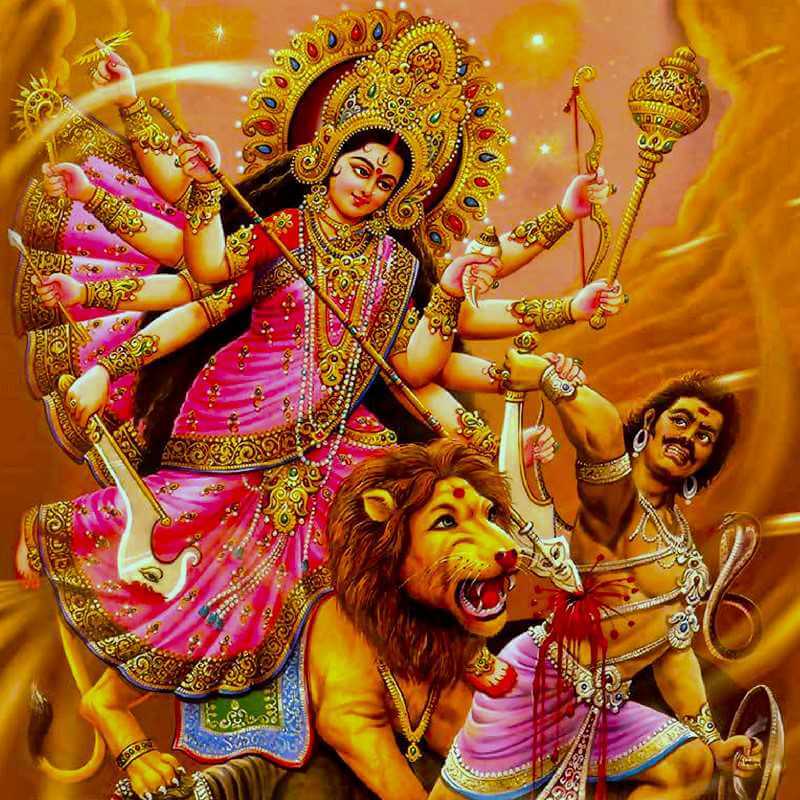
Hindus commemorate the goddess Durga’s victory over the monster Mahishasura during the festival of Navratri. Because of Mahishasura’s devotion to him, Lord Brahma had granted Mahishasura the gift of immortality, ensuring that he would never die.
The only individual who would be able to take down Mahishasura would be a woman, hence this gift did have one restriction. Mahishasura was pleased with the bargain because he didn’t believe any woman could kill him.
No god was able to stop Mahishasura and his soldiers as they became stronger and began assaulting people on Earth. Finally, the three most potent Hindu gods—Lord Brahma, Lord Vishnu, and Lord Shiva—decided to unite and manifest the goddess Durga, a formidable woman whose mission would be to kill Mahishasura.
Before fighting Mahishasura, the gods gave the goddess Durga a plethora of weapons. For ten days, Durga battled the demon, but it was challenging since he kept changing his appearance to trick the goddess. But when he at last transformed into a buffalo, Durga was able to triumph over him.
Do you have any questions or issues related to personal life, love life, career, or health? Consult the best astrologers and get answers/ solutions to all your problems based on your own birth chart.
Significance of Navratri
Navratri is Hindi for “nine nights.” Nine and night are represented by the words “Nava” and “Ratri,” respectively.
Devi stands for the eternal cosmic Energy. This Energy permeates the entirety of Creation.
The night allows us relaxation and renewal. You spend the night turning inside as you sleep, and you awaken the next morning feeling relaxed and rejuvenated. Similar to this, during Navratri, also known as the “nine nights,” you have the opportunity to enjoy a deep relaxation. This extended period of relaxation promotes creativity, deep relaxation, and escape from all kinds of hassles.
This deep relaxation is facilitated by fasting, meditation, prayer, and other spiritual practices carried out during this time. Even limiting your consumption of sensory elements will help you achieve a relaxed state during this period.
Navratri and the related Goddesses
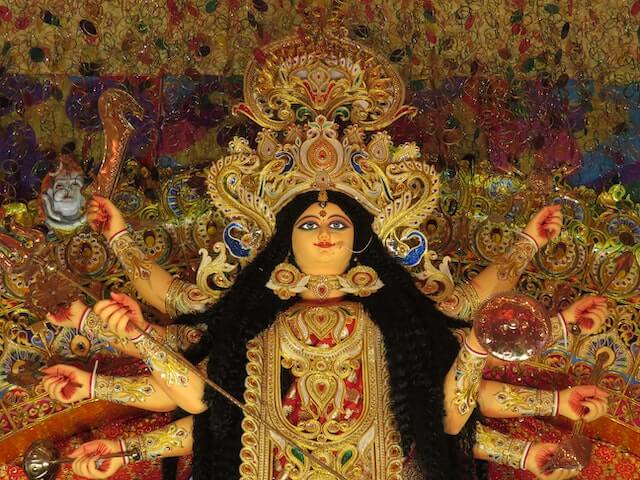
The festival commemorates the epic war between Durga and the evil Mahishasura to mark the triumph of good over evil. The Navadurga, Durga’s nine avatars, are the central objective of these nine days. Every day is linked to a different goddess avatar.
- Pratipada Tithi – Devi Shailaputri
This day is referred to as Pratipada (first day) and is connected to Shailaputri (“Daughter of Mountain”), a manifestation of Parvati. In this incarnation, Durga is revered as Shiva’s wife and is shown riding the bull Nandi while holding a trishula in her right hand and a lotus in her left. According to legend, Shailaputri is Mahakali’s Avatar.
Yellow, the color of the day, represents activity and vitality. She is also referred to as Hemavati and is thought to be a reincarnation of Sati, Shiva’s first wife (who later takes the form of Parvati).
- Dwitiya Tithi – Devi Brahmacharini
Goddess Brahmacharini, a different form of Parvati, is worshipped on Dwitiya (the second day). Parvati took on the form of Yogini, her unmarried self. Brahmacharini is revered for bestowing moksha, or liberation, as well as stability and prosperity.
She represents joy and peace and is portrayed as strolling barefoot while holding a Japa mala (rosary) and a kamandala (pot). The color scheme for Dwitiya Navratri is green.
- Tritya tithi – Devi Chandraghanta
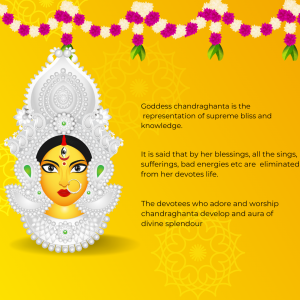
The third day, or Tritiya, marks the worship of Devi Chandraghanta another incarnation of Devi Parvati. She is called Chandraghanta because she wears a crescent moon on her head. She is both the epitome of beauty and a representation of courage. The third day’s color is grey, which represents balance, diplomacy, and intellect.
- Chaturthi Tithi – Devi Kushmanda
On Chaturthi (the fourth day), devotees worship the goddess Kushmanda. The color of the day is orange because Orange color is the color of creativity and compassion and Devi Kushmanda, who is thought to represent the universe’s creative force, is believed to have created life on earth. She is pictured sitting atop a tiger and having eight arms (ashtabhuja).
- Panchami Tithi – Devi Skandamata
The goddess Skandamata, who is celebrated on Panchami (the fifth day), is Kartikeya’s mother who is also known as Skanda. The color associated with this day is white which represents peace, strength, and power. She is represented as chaturbhuja (having four arms) riding a lion with a baby in her arms.
- Shashthi tithi – Devi Katyayini
The sixth day of the Navratri is dedicated to Devi Katyayini. She is an incarnation of Durga who was born to the sage Katyayana and is depicted as displaying the boldness that the color red represents.
She is referred to as the warrior goddess and is one of Devi’s most aggressive manifestations. Katyayani has four hands (chaturbhuja) and a lion as her ride. She is a manifestation of Mahalakshmi, Mahasaraswati, and Parvati. On this day, Maha Shashti and the beginning of the shardiya Durga Puja are observed in eastern India.
- Saptami Tithi – Devi Kaalaratri
On Saptami, Kalaratri, thought to be the fiercest manifestation of Goddess Durga, is worshipped. According to legend, Parvati took on the avatar of a dark-skinned goddess out of rage in order to kill the demons Sumbha and Nisumbha.
The color associated with seventh day of Navratri is Royal blue. The Goddess has flaming eyes and wears crimson clothing or tiger skin. The blood red color symbolizes protection and assures followers that the Goddess will shield them. Her skin darkens when she displays her fury.
- Ashtami Tithi – Devi Mahagauri
Ashtami (eighth day)of Navratri is dedicated to Devi Mahagauri. Mahagauri is a representation of wisdom and harmony. Pink, a color that symbolizes optimism, is the color linked with this day.
On this day, Maha Ashtami is celebrated in eastern India, beginning with pushpanjali, kumari puja (Kanya Pujan), etc. It is a very significant tithi and is recognized as the birthday of Chandi’s Mahishasuramardini Rupa.
- Navami Tithi – Devi Siddhidatri
People pray to Siddhidhatri on the Navratri’s final day, also known as Maha Navami or Navami (the ninth day). She is regarded as possessing and bestowing all Siddhis while seated on a lotus .
The colour associated with the ninth day of navratri is Purple. Siddhidhatri is viewed as Shiva and Shakti’s Ardhanarishvara form. One side of Lord Shiva’s body is thought to be that of Goddess Siddhidatri. As a result, he is sometimes referred to as Ardhanarishwara. Scriptures from the Vedas claim that Lord Shiva achieved all the siddhis through service of this Goddess.
On this day, Maha Navami, which is as significant as Astami in eastern India, is observed. Additionally, navami homa is a crucial ceremony performed at the tithi. In the majority of India, a ceremony known as Ayudha Puja involves worshipping implements and weapons.