Dussehra Festival 2022- Overview
According to the Hindu calendar, the Dussehra festival or Vijayadashami is a very significant and auspicious festival observed by Hindus on the tenth day of Ashwin month (September–October), which coincides with Navratri’s tenth day. The festival of Dussehra will be observed this year on October 5, 2022.
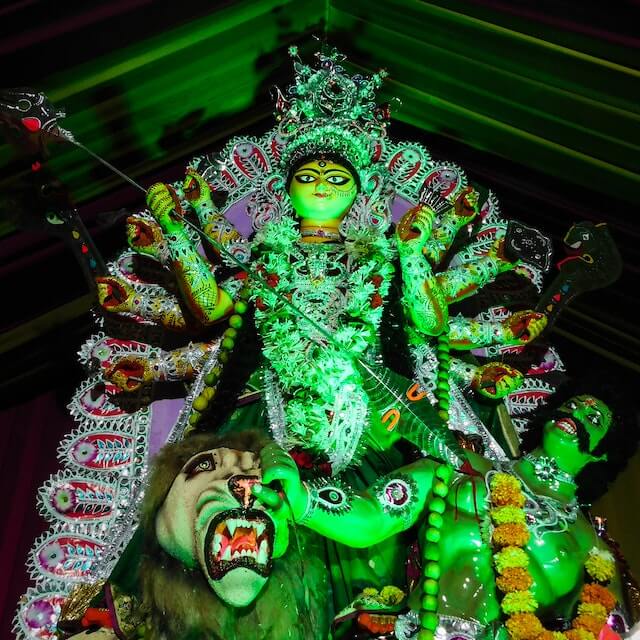
The festival of Vijayadashami commemorates the victories of Lord Rama over the demon Ravana and Goddess Durga over the buffalo-demon Mahishasura. Dussehra or Dasara are additional names for Vijayadashami. Dasara is known as Dashain in Nepal. Following nine days of Navratri, the tenth day, known as Dusserah or Vijayadashami, represents the triumph of good over evil.
Dussehra Festival 2022: Date and timing
Wednesday, 05th October 2022
Dashami Tithi begin: 02:20 PM, 04 October 2022
Dashami Tithi ends: 12:02 PM, 05 October 2022
Vijay Muhurat: 02:07 PM to 02:54 PM
Do you have any questions or issues related to personal life, love life, career, or health? Consult the best astrologers and get answers/ solutions to all your problems based on your own birth chart.
Dussehra Festival 2022: Mythology
The legend related to Lord Rama
Hindu legend describes Ravana as the demon ruler of Lanka, a region to the south of India, who lusted after Sita, Lord Rama’s spouse. Sita was taken captive by Ravana and kept in his empire of Lanka.
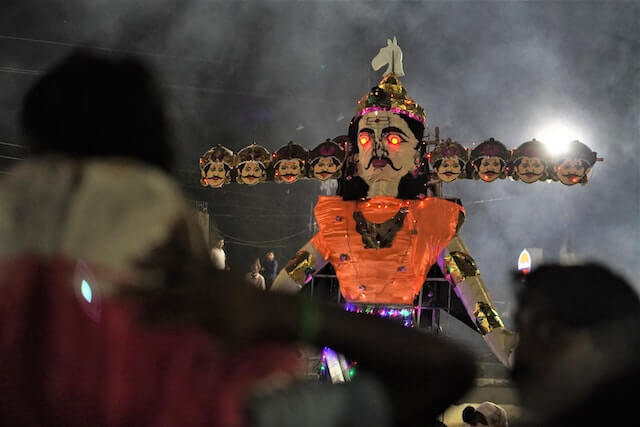
The first nine days are known as Navratri, and the tenth, on which Ravana is defeated, is known as the Dussehra festival. The demon Ravana’s statues are burned to mark the end of the Navratri festival. The destruction of Ravana represents the victory of good over evil.
The legend related to Goddess Durga
Another popular mythology in the eastern and northern Indian states sees Goddess Durga slaying the monster Mahishasura in order to bring peace to the planet. Navratri is a celebration that is observed since the Goddess and the devil fought for ten days.
When Mahishasura is killed by the goddess Durga on the tenth day, the day is commemorated as the Dussehra festival or Vijayadashmi, which means “victory that was achieved on the tenth day.”
People in the northern and western portions of the region fast while celebrating the nine manifestations of the Goddess throughout the nine days leading up to Vijayadashami, which are each devoted to a different potent manifestation of Goddess Durga.
As it is a time of celebration for them and they take part in the event with great pomp and fervour, the eastern and north-eastern regions of India do not fast during Durga Puja. In the eastern and northeastern regions of the country, Goddess Durga is worshipped for five days, and on the tenth day, the idol is submerged in water bodies to signify the conclusion of the celebration.
Significance of Dussehra 2022
The Dussehra festival is observed for numerous reasons and is celebrated and observed differently throughout India. Vijayadashami signifies the conclusion of Durga Puja in the southern, eastern, northeastern, and certain northern areas of India. This commemorates goddess Durga’s victory over the buffalo evil Mahishasura to reinstate and safeguard dharma.
The event is known as the Dussehra festival in the states in the north, centre, and west (also spelled Dasara, Dashahara). In some regions, it commemorates the conclusion of Ramlila and god Rama’s victory over Ravana.
During Vijayadashami or the Dussehra festival celebrations, clay figurines of Durga are carried in processions to a river or oceanfront while being accompanied by music, dance and chants. The statues are then submerged in the water for dissolution and farewell.
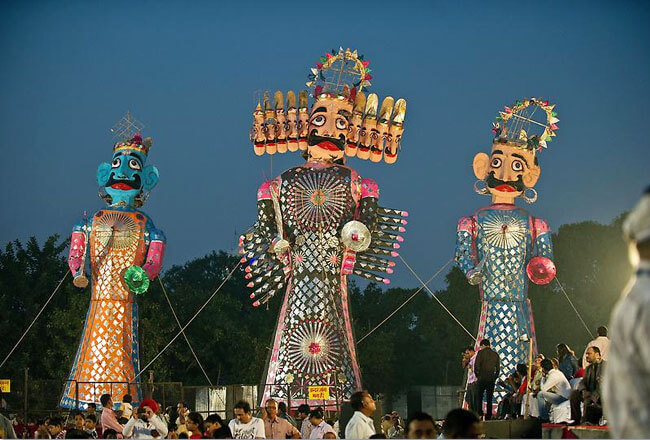
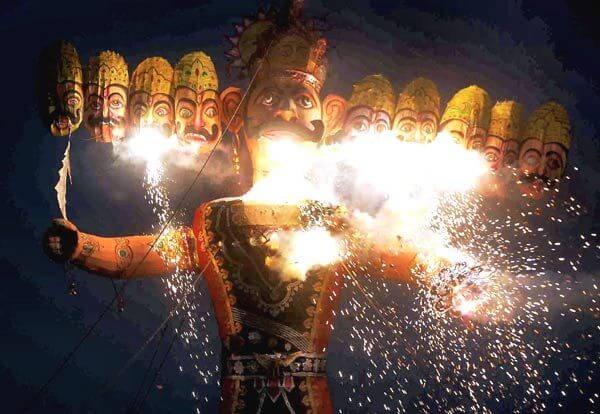
In some places, during Dasara, enormous effigies of Ravana, who represents evil, are set ablaze with fireworks to symbolize the defeat of evil. The celebration also heralds the beginning of Diwali’s preparations, the significant festival of lights that follows Vijayadashami by 20 days.
Many people believe that the Dussehra festival is called Vijaya Dashami due to Lord Ramchandraji’s conquest of Lanka on this day. Some believe o n Ashwin Shukla Dashami there is a time period known as “Vijaya” when the stars rise. All tasks yield good results during this time.
This festival is known as Durga Parv in Bengal and is celebrated with much enthusiasm. A few days before this celebration, Ramlila begins across the nation. The statues of Meghnath, Kumbhkaran, and Ravana are burned at night.
The main events of this celebration include Durga Puja, Aparajita Puja, Shami Puja, Navratri Parayana, and murti visarjan. This is regarded as a significant Kshatriya festival. On this day, Vaishyas perform Bahi Puja, Kshatriyas worship their weapons, and Brahmins perform Saraswati Puja.
On this day, we honour the triumph of generosity over narrow-mindedness and the great mind over the petty. Typically, when our minds become dominated by negative inclinations, we continue to battle them.
At this point, we leave it to God by pleading, “I can’t struggle with my own thinking; take care of it and show me the way.”
The nine days of Navratri stand for the triumph of spiritual strength and the higher self over insignificance and ignorance.
Dussehra festival celebrations
Different parts of the country celebrate the Dussehra festival celebration according to their customs and traditions. Ram-Lila is the name of a play that is based on the Ramayana. The Ramayana epic is performed in a sequence of acts that incorporate song, storytelling, recital, and dialogue in a performance known as Ramlila, which literally translates as “Rama’s play.”
It is held every year during the Dussehra festival in northern India. The Ramacharitmanas, one of the most popular narrative genres in the country’s northern region, provide the basis for the Ramayana stage production.
In order to make the Sanskrit epic understandable to everyone, Tulsidas created this religious work in Hindi in the seventeenth century that is devoted to the grandeur of Rama, the Ramayana’s main character.
Most Ramlilas tell stories from the Ramacharitmanas over the course of ten to twelve days of plays, while some, may stretch an entire month. It depicts Ravana, his son Meghnath, and brother Kumbh-Karan being defeated as well as Rama’s victory.
At the conclusion of the Ramayana, people set fire to all of the enormous, horrifying statues of Ravana, Meghnath, and Kumbh-Karan to symbolise Rama’s victory and Ravana’s destruction while setting off firecrackers.
People wait a whole year to enjoy this celebration. It’s a meeting chance for all, making the festival memorable. On this day, people prepare special meals at home and leave the house to attend the fair and the Ram Lila
Devotees worship Lord Rama and ask for his blessings in order to live joyful and successful lives. Many schools, colleges, and learning facilities observe the Dussehra festival.
The Dussehra festival represents tenacity, willpower, triumph, faith, and cohesion. Everyone must be aware of the importance of the Dussehra Festival in order to identify themselves with ancient culture and tradition, as well as the value of strong forces and the courage to face up to wrongdoers.
Buy best quality original Gemstones❤️